
Amrudin Ćatić
Strategy, creativity, and technology are combined to craft digital experiences that perform. Smart marketing meets creative execution, always focused on growth, problem-solving, and real impact.
Tag Archives: systems design
How teams can use CHATA model: A unified approach to communication
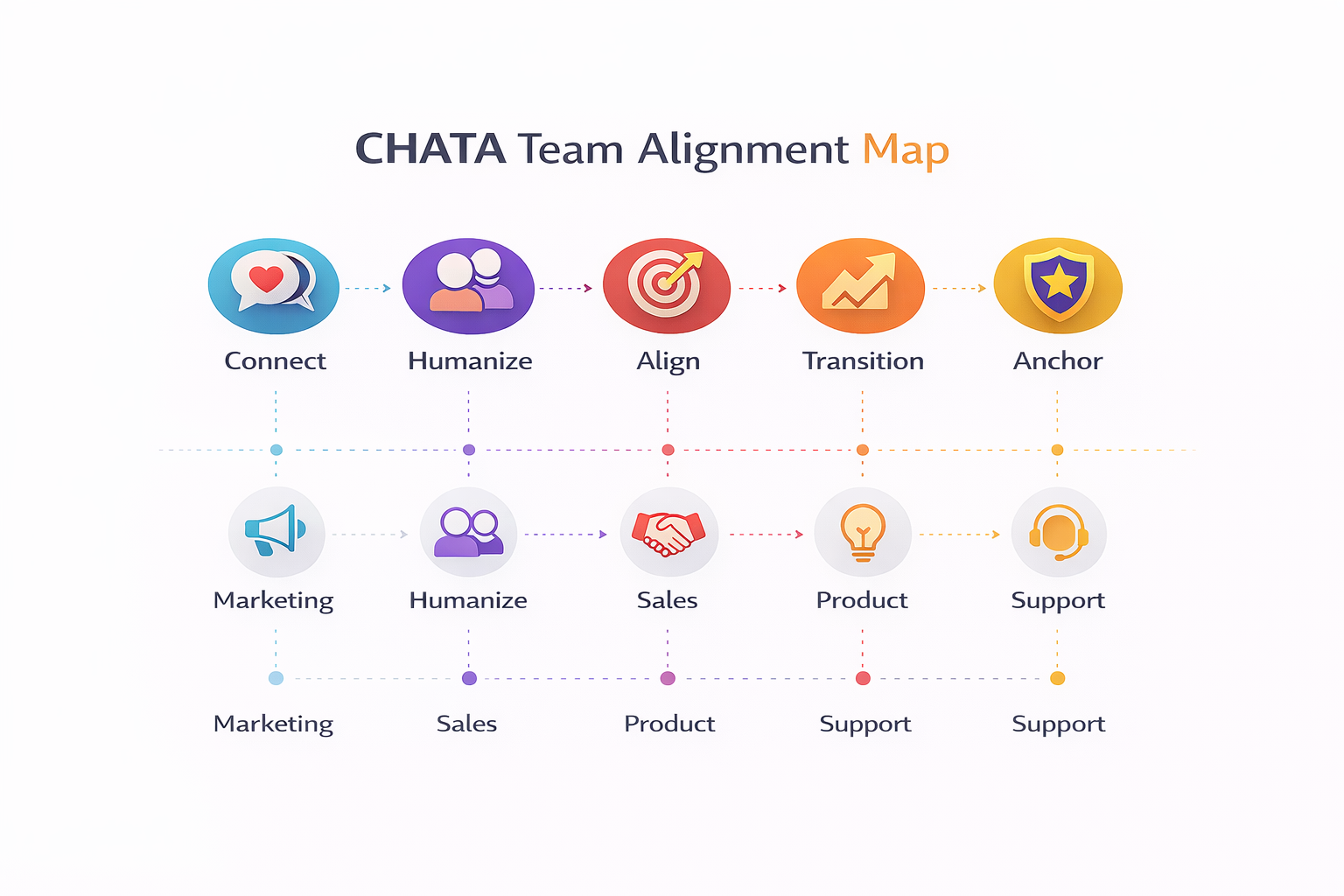
Most teams don’t struggle because of a lack of talent. They struggle because of misalignment in communication. Marketing says one thing.Product says another.Sales simplifies it differently.Support explains it in its own way. Individually, everyone makes sense. Collectively, the message fractures. That fracture creates: This is where the CHATA model (Connect → Humanize → Align →…
5 processes no founder realizes they can automate (but should have yesterday): The game-changing efficiency guide

Running a startup feels like juggling flaming torches while riding a unicycle, doesn’t it? You’re selling, hiring, marketing, answering emails, managing invoices, and somehow expected to “scale.” The truth is, many founders don’t fail because of bad ideas. They burn out because they’re doing too much manually. In this guide, we’ll break down 5 processes…
CHATA model in UX writing: Microcopy that guides, not interrupts

Most UX writing doesn’t fail because it’s unclear. It fails because it interrupts instead of guiding. Buttons push.Tooltips overload.Error messages shame.Onboarding overwhelms. And users feel it instantly. The issue isn’t wording.It’s a sequence. This is where the CHATA model (Connect → Humanize → Align → Transition → Anchor) becomes powerful in UX writing, not as…
The automation gap: How companies lose millions by refusing to automate the boring stuff

The automation gap explains how companies lose millions by refusing to automate repetitive work, what causes it, and how leaders can close it fast. Introduction: Understanding the automation gap The automation gap refers to the growing disconnect between what businesses could automate and what they actually automate. While technology has advanced rapidly, many organisations still…
The CHATA content structure: Building a topic cluster with a single model
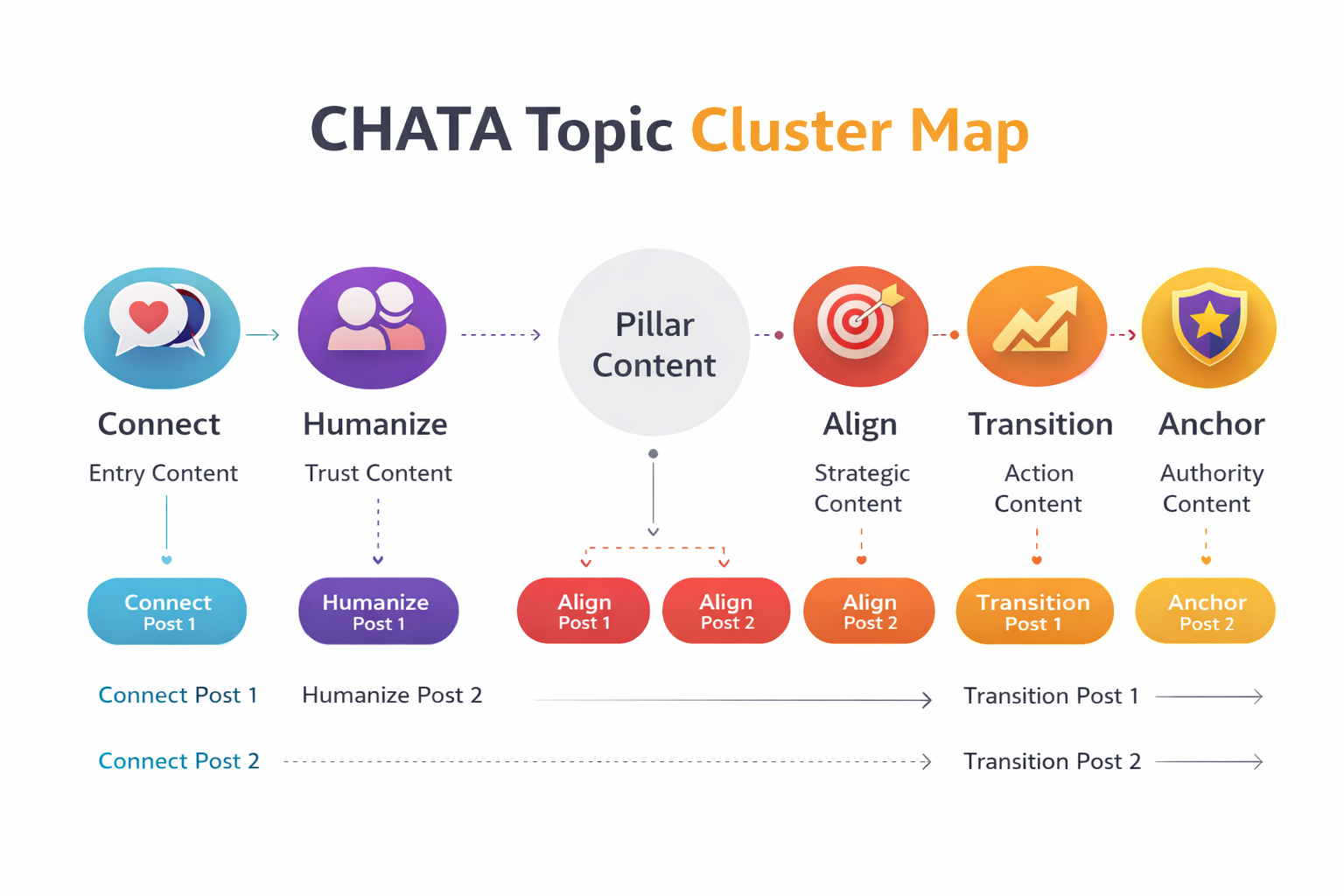
Most content strategies collapse under their own weight. Not because they lack ideas. But because they lack structure. You publish: And after six months, nothing connects. Traffic is fragmented.Authority is diluted.Messaging drifts. This is where the CHATA model (Connect → Humanize → Align → Transition → Anchor) becomes more than a messaging framework. It becomes…
Building a CHATA-driven brand story: Consistency across channels

Introduction: Why most brand stories collapse under pressure Every brand claims to have a “story.”Most of them collapse the moment you change the channel. The website sounds confident.The LinkedIn posts feel generic.The emails feel transactional.The ads feel desperate. That’s not a storytelling problem, it’s a structural one. Modern audiences don’t experience brands linearly. They encounter fragments:…
The complete guide for starting a digital marketing career in 2026

Discover skills, trends, tools, salary expectations, and step-by-step strategies to launch a successful digital marketing career next year. The complete guide for starting a digital marketing career in 2026 Starting a digital marketing career in 2026 is one of the smartest choices you can make today. With businesses shifting online faster than ever and AI…
CHATA for B2B SaaS: A modern model for clear positioning & JTBD alignment

Learn how the CHATA model helps B2B SaaS companies clarify positioning, align with Jobs To Be Done, and drive sustainable growth. B2B SaaS marketing is broken in a very specific way. Products are powerful.Teams are smart.Features are impressive. And yet, most SaaS websites, email sequences, onboarding flows, and sales decks sound the same. The problem…
If a “Great” idea needs explaining, it’s not great
A great idea doesn’t need a PowerPoint.It doesn’t need a pitch.It doesn’t need a warm-up, a preface, or a 40-minute TED Talk intro just to make sense. If an idea is truly great, it hits instantly.People understand it in one breath.They feel it before they analyse it. The moment you need to start explaining, really…
Using CHATA model for email sequences: How to transform cold outreach, nurture flows, and outboarding into high-conversion journeys

Email isn’t dying, your sequencing is.What most marketers call “email strategy” is nothing more than recycled templates, shallow personalization, and random “value emails” thrown into the void. The problem isn’t the channel. It’s the psychology behind how people move through it. This is where the CHATA model becomes lethal. CHATA (Connect → Humanize → Align…