
Amrudin Ćatić
Strategy, creativity, and technology are combined to craft digital experiences that perform. Smart marketing meets creative execution, always focused on growth, problem-solving, and real impact.
Tag Archives: productivity
Writing for decision makers, not algorithms: 7 powerful shifts that actually influence action
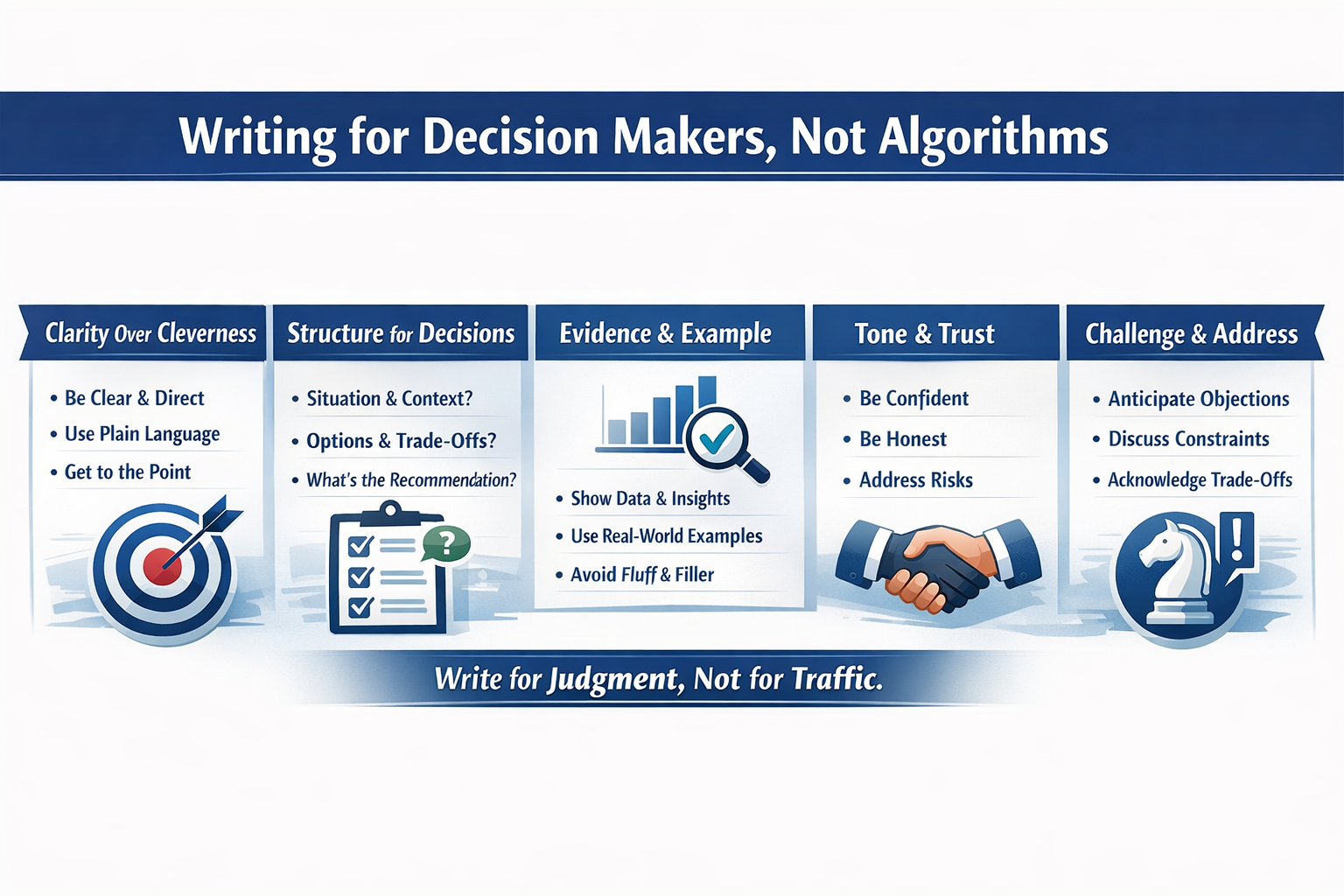
Writing for decision makers. Not algorithms is a smarter, human-first approach that prioritises clarity, credibility, and real-world impact over keyword stuffing and empty optimization. Introduction: Writing for decision makers. Not Algorithms In boardrooms, executive inboxes, and strategy decks, one truth stands out: decision makers don’t read like algorithms. They scan for value, judge credibility instantly,…
Why most business content is invisible (and deserves to be): 7 uncomfortable truths about modern marketing
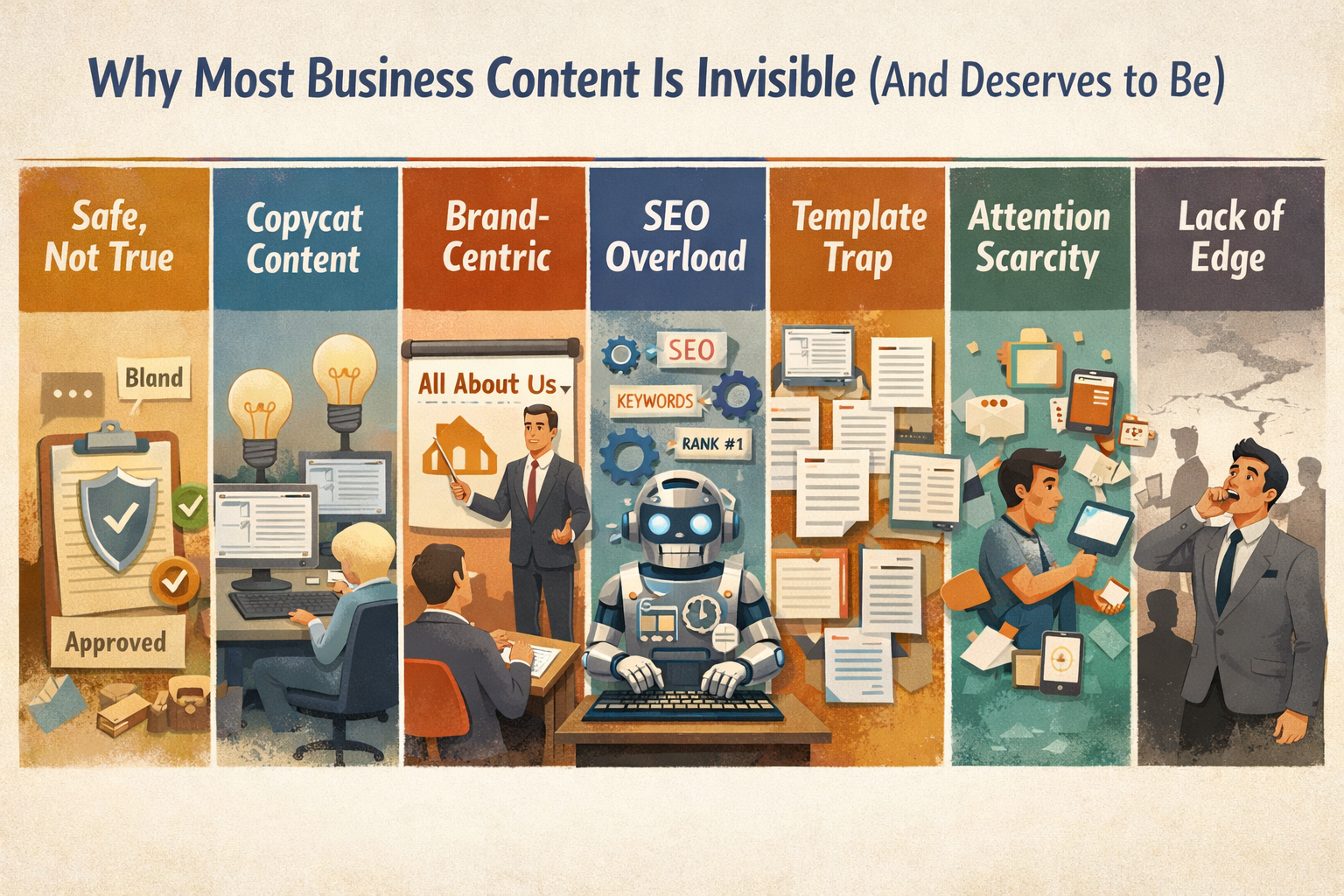
Why most business content is invisible (and deserves to be) because it’s generic, risk-averse, and disconnected from real audiences. This out-of-the-box breakdown explains why content fails and what professionals must do instead. The uncomfortable reality of modern business content Let’s start with a truth most professionals sense but rarely say out loud: the internet is…
Business content that sells without begging: 9 proven strategies that actually work

In today’s crowded digital marketplace, customers are tired. They’re tired of pop-ups, countdown timers, exaggerated claims, and copy that practically shouts “Please buy now!”. This is exactly why Business content that sells without begging has become the most sustainable way to attract, convert, and retain customers. Instead of chasing prospects, this approach pulls them in…
Retention through the CHATA model: The missing layer in most marketing
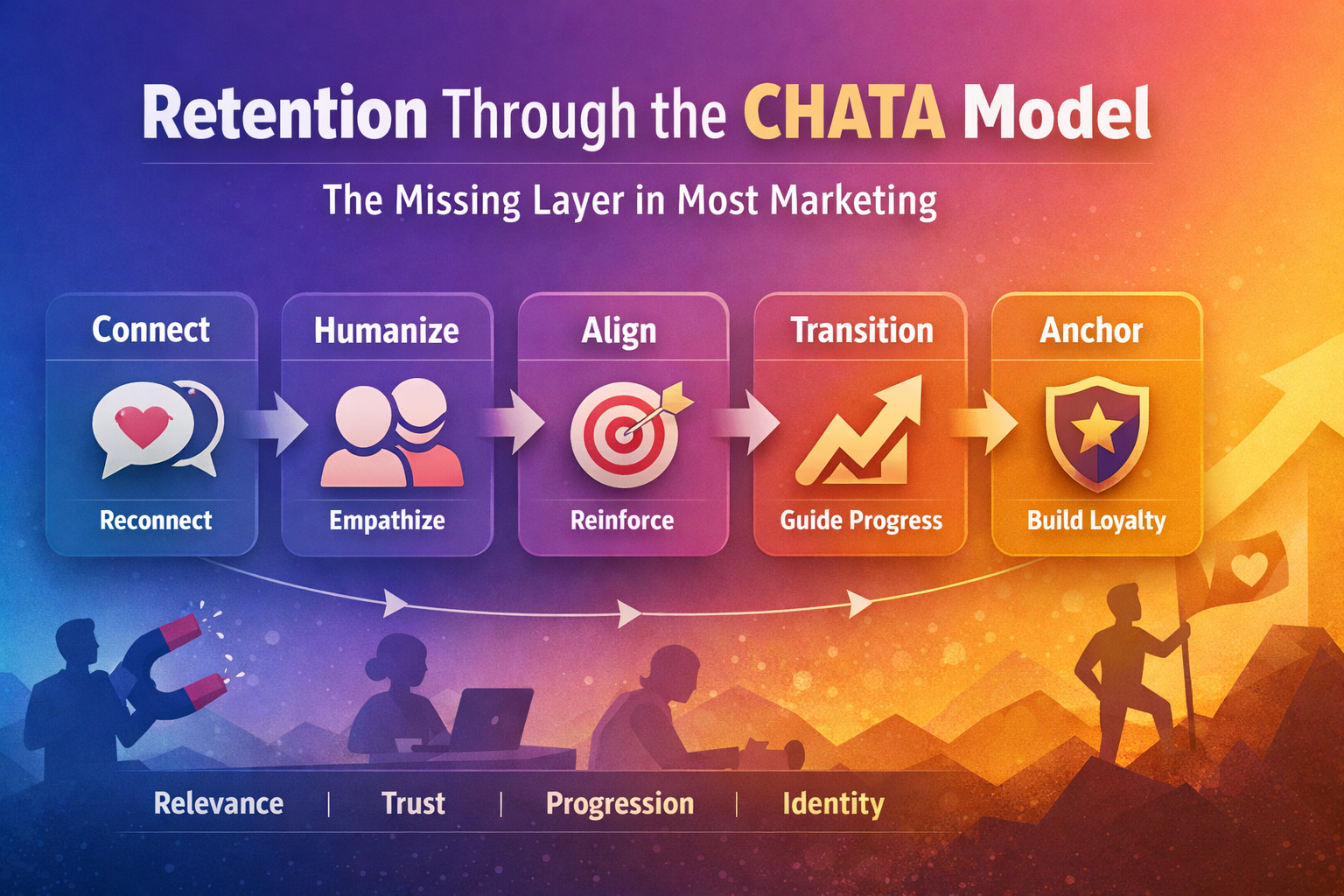
Most marketing strategies are built to win attention. Very few are built to deserve continuity. Teams optimize for acquisition, celebrate conversions, and then quietly hope retention “just happens.” When it doesn’t, the blame usually falls on the product, pricing, or onboarding. That diagnosis is often wrong. Retention is rarely a product problem. It’s a narrative…
The only programmatic metric that actually predicts profit (everything else is noise): 1 brutally honest truth
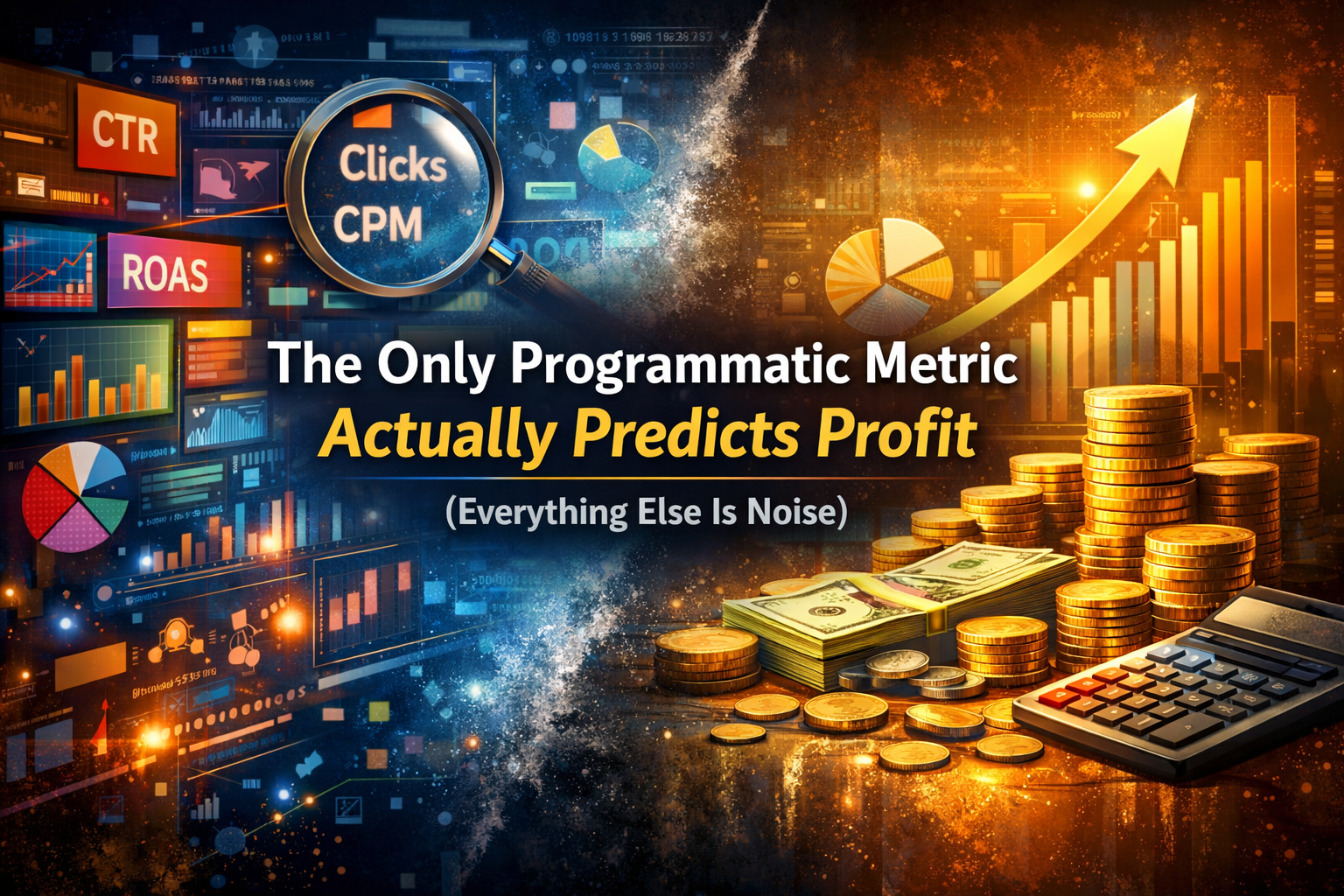
Discover why The only programmatic metric that actually predicts profit (everything else is noise) matters more than CTR, CPC, or impressions, and how to use it to drive real business growth. Understanding the real problem with programmatic metrics Programmatic advertising promised efficiency, scale, and precision. And it delivered, at least in terms of data. Today,…
Programmatic agencies are overpricing garbage inventory – Shocking data & Hard truths (7 Insights)

Programmatic agencies are overpricing garbage inventory, and the data proves it. This in-depth analysis reveals how inflated CPMs, low-quality placements, and misaligned incentives are draining advertiser budgets, and what you can do about it. Introduction: Why “Programmatic agencies are overpricing garbage inventory” is a growing concern Programmatic agencies are overpricing garbage inventory, and advertisers are…
Top 13 ChatGPT prompts for marketing that skyrocket results (2026 guide)

Discover the top 13 ChatGPT prompts for marketing that help brands create better content, boost conversions, and save hours of work. Practical, ready-to-use examples included. Introduction to ChatGPT prompts for marketing In today’s fast-paced digital world, marketers are expected to produce more content, faster, and with better results. That’s exactly where the top 13 ChatGPT prompts for marketing come…
CHATA model in copywriting: Real rewrite examples that prove the model

Most copywriting frameworks sound great in theory. Until you try to use them. They explain what good copy should do, but fail to show how it actually changes words on the page. The result?Conceptual clarity, zero execution power. The CHATA model is different for one reason:It forces a visible change in the copy itself. In…
Testing in the age of AI: Where automation ends and judgment begins
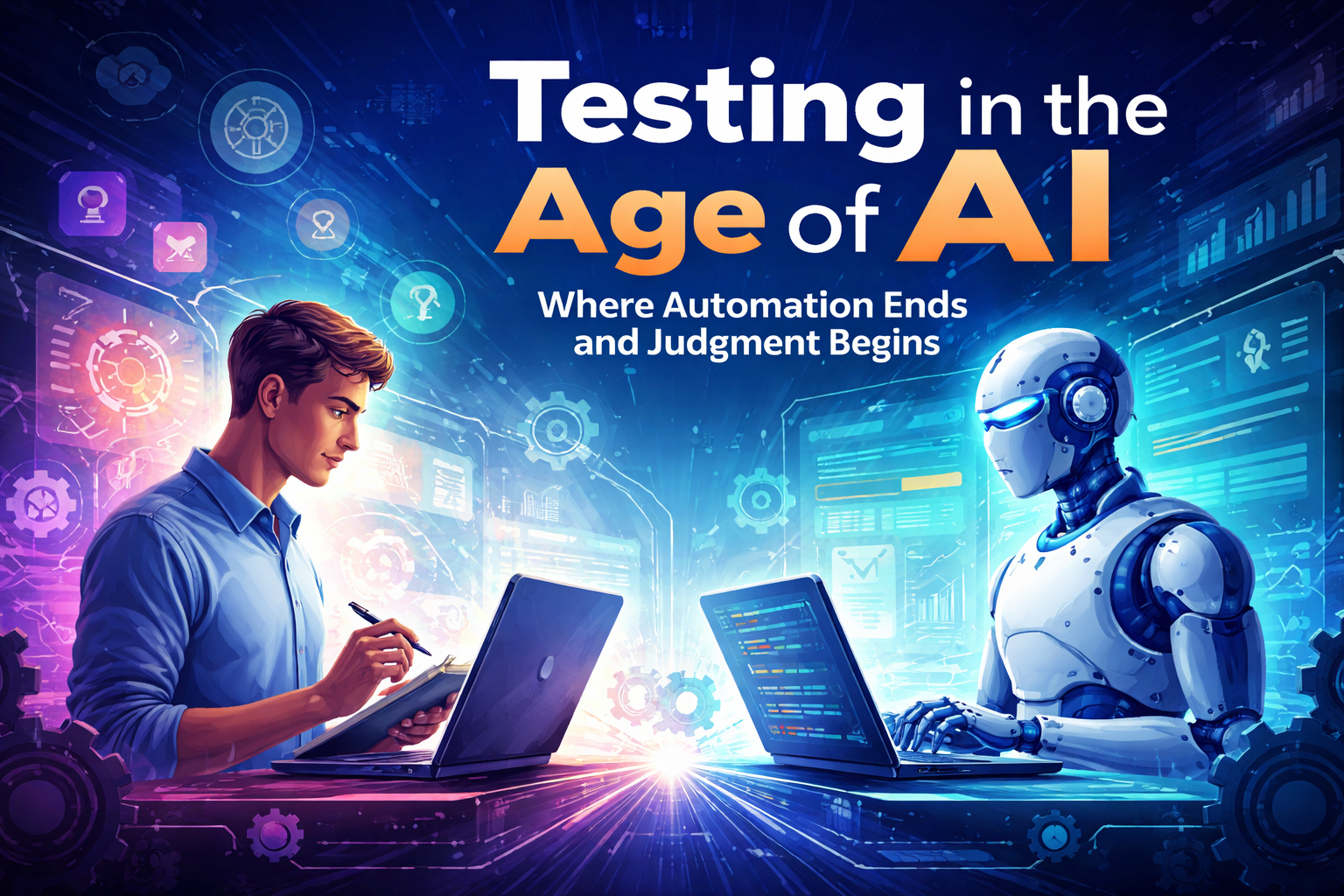
Testing in the age of AI: Where automation ends and judgment begins explores how artificial intelligence is transforming software testing, what automation can and cannot do, and why human judgment still matters more than ever. Introduction to testing in the age of AI Testing in the age of AI: Where automation ends and judgment begins is no…
Testing is a strategy problem, not a tooling problem
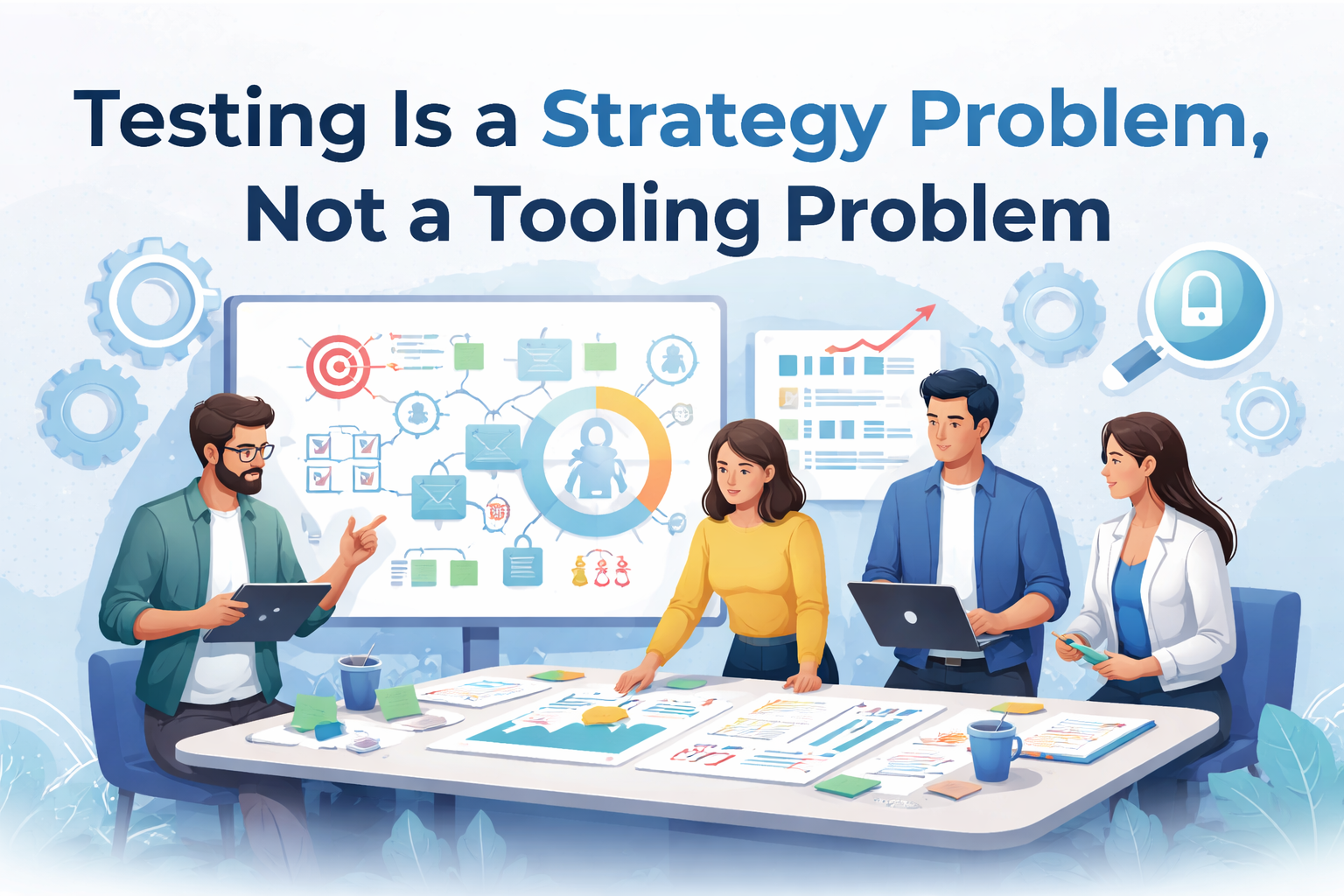
Testing is a strategy problem, not a tooling problem, learn why testing success depends on mindset, planning, and culture, not just tools, frameworks, or automation. Understanding the core idea behind the testing strategy The statement Testing is a strategy problem, not a tooling problem challenges one of the most common assumptions in modern software development….