
Amrudin Ćatić
Strategy, creativity, and technology are combined to craft digital experiences that perform. Smart marketing meets creative execution, always focused on growth, problem-solving, and real impact.
Google Ads in 2025: 7 Must‑know changes and what still works
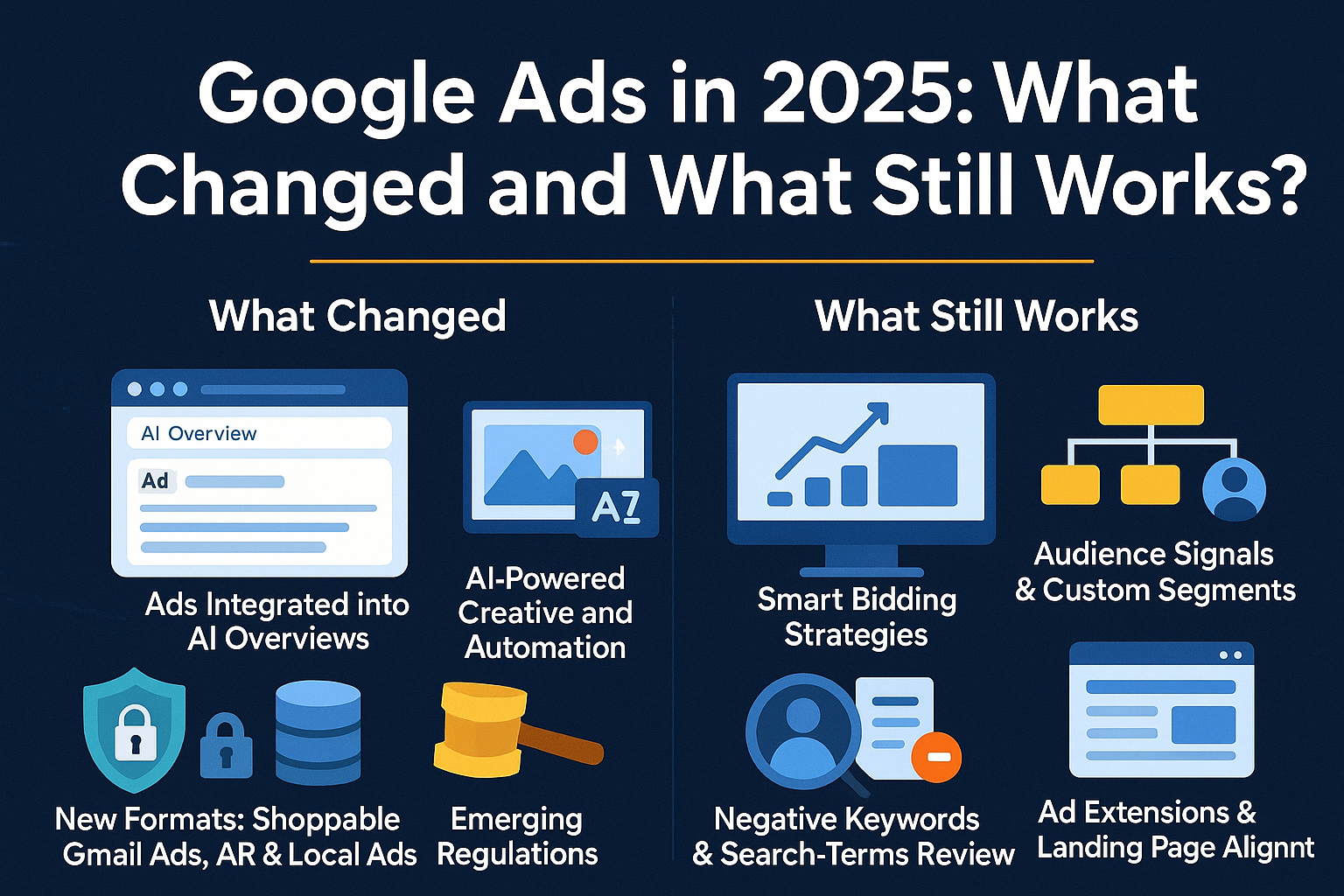
Google Ads in 2025: Discover what changed in Google Ads, what still works, and how to stay ahead with AI-powered best practices and privacy‑first strategies.
Google Ads in 2025: What changed and what still works?
In 2025, Google Ads is a different beast, AI overviews, automated bidding, and new ad formats dominate. But many foundational strategies still work if adapted. In this update, discover what has changed, what remains effective, and how businesses can win with Google Ads in 2025.
What changed in Google Ads in 2025
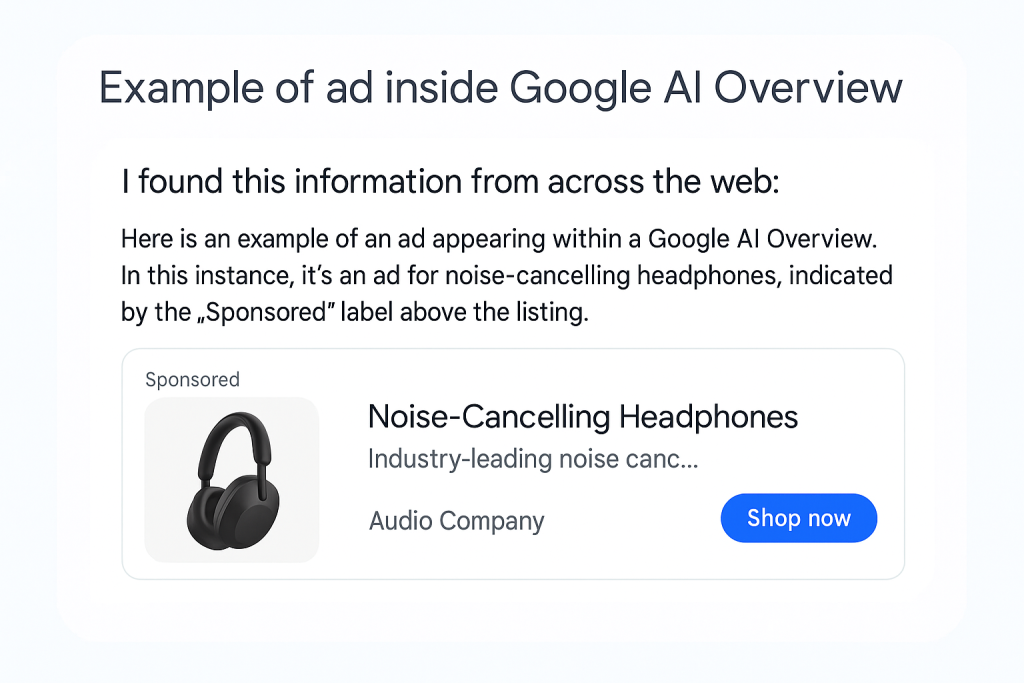
1. Ads integrated into AI overviews and AI Mode
In 2025, Google started placing ads directly inside Google’s AI Overviews and AI Mode responses, not just in classic SERP slots. Instead of manual targeting, the system pulls these placements from your existing campaigns based on audience and keyword signals. You can’t control them directly, Google selects them based on campaign settings.
2. AI-Powered creative and automation
AI tools like Image Generator (Imagen) and text-to-video (Veo) are widely used to create ads. Performance Max campaigns automatically combine these creatives across channels.
3. Privacy-first tracking and first‑party data
To stay GDPR/CCPA compliant and feed AI bidding systems, marketers now rely on Consent Mode V2 and enhanced conversion tracking. At the same time, first-party data has replaced third-party cookies as the primary targeting asset.
4. New formats: Shoppable Gmail Ads, AR & Local Ads
Gmail is testing shoppable ad units that mimic e-commerce galleries inside the Promotions tab. Augmented Reality product try-ons and 3D displays are expanding in retail ads. Demand Gen ads now support Promoted Pins on Maps to drive foot traffic to physical stores.
5. Emerging regulations and publisher pushback
New rules in the EU, Canada, and U.S. states like California and New York are pushing for transparency and brand accountability in ad placements. Publishers are adopting tools like Google’s Offerwall micropayments to mitigate traffic loss from AI Overviews.
What still works in Google Ads today
1. Smart bidding strategies
Automated bidding strategies like Target CPA, Target ROAS, and Maximize Conversions are more important than ever. To keep costs predictable while scaling, experts recommend a “step function” budget increase, add 20%, then pause before the next jump.
2. Well‑structured campaigns
Highly themed ad groups with 2‑3 related keywords still boost relevance. Use separate brand and non‑brand campaigns for clarity and budget control.
3. Audience signals & custom segments
Use in-market, affinity, and custom intent audiences alongside keywords. Customer Match remains effective, upload your first-party lists to re‑engage or build lookalikes.
4. Negative keywords & search Terms review
Regularly vet and nest negative keywords to avoid irrelevant clicks, which lowers Quality Score and costs.
5. Ad extensions & landing page alignment
Sitelinks, callouts, structured snippets, price, and lead form extensions improve CTR. Strong landing pages, fast, relevant, with a clear call-to-action, remain crucial.
6. Solid conversion tracking
Ensure tracking is reliable and covers all relevant actions, web, app, and offline. Offline Conversion Import must include the conversion_environment tag by September 30, 2025.
Table: Summary of changes vs. What still works
| Area | What changed in 2025 | AI‑generated text, images, and video |
|---|---|---|
| Ad placements | Ads in AI Overviews & AI Mode | Search ads in SERP and PMax placements |
| Creative | Themed ad groups, negative keywords, and brand segregation | Responsive Search Ads + tested ad copy |
| Bidding | Fully automated Smart Bidding | Smart Bidding with stable conversion data |
| Data & targeting | First‑party data + Consent Mode V2 | Audience signals, custom segments, Customer Match |
| Formats | Gmail shopping cards, AR try‑ons, Maps Pins | Standard search, display, YouTube, shopping |
| Tracking & attribution | Consent‑based tracking & new offline conversion tag | Accurate tracking across web/app/offline |
| Campaign structure/process | AI-heavy automation | Themed ad groups, negative keywords, brand segregation |
While Google Ads has evolved significantly in 2025 with the rise of AI-driven placements, privacy-first tracking, and dynamic creative formats, one thing remains true, your success still depends on the right tools. Whether you’re optimizing campaigns, analyzing keyword performance, or automating reporting, having the right SEO and PPC toolkit makes a difference. Also, check this Top SEO Tools for 2025 to discover essential platforms that pair perfectly with your Google Ads strategy this year.
Frequently asked questions (FAQ)
Q1: Can I still use keyword targeting in 2025?
Yes! Keyword targeting still works, especially within structured ad groups and matched with audience signals.
Q2: Do ads in AI Overviews cannibalize clicks from search results?
They can. But ad placements inside them offer new visibility, especially for longer, exploratory queries.
Q3: Is AI automation risky?
Not if it’s guided: feed high‑quality data, set clear conversion goals, monitor outputs regularly, and don’t rely on automation blindly.
Q4: What’s the deal with first-party data?
It’s essential. Since third-party cookies are largely phased out, first-party data is now the main fuel for targeting and conversions.
Q5: Are ad extensions still relevant?
Absolutely. Extensions improve CTR, ad real estate, and Quality Score.
Q6: Should I care about new regulations?
Yes. New laws require greater ad transparency and consent. Non-compliant ads could be penalized or restricted.
Final thoughts
To succeed with Google Ads in 2025, you need an AI‑savvy and privacy-conscious approach. Formats and placements are evolving, think AI Overviews, Gmail shopping cards, and AR integration, but the fundamentals still matter. The best results come from blending human insight and oversight with smart AI tools.