
Amrudin Ćatić
Strategy, creativity, and technology are combined to craft digital experiences that perform. Smart marketing meets creative execution, always focused on growth, problem-solving, and real impact.
From features to failure modes: Designing for what will break
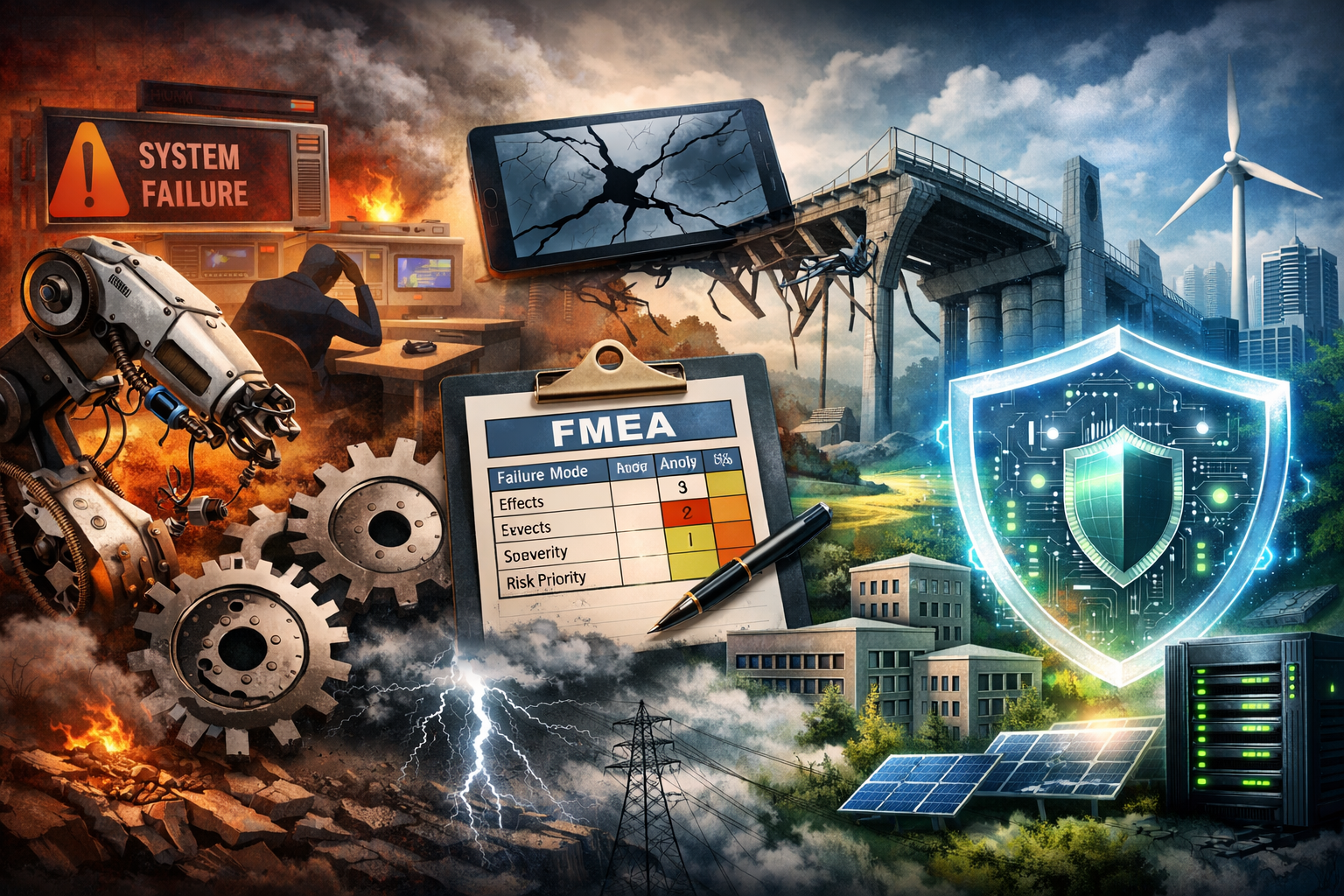
From features to failure modes: Designing for what will break explains how anticipating breakdowns leads to stronger, safer, and more resilient products, systems, and designs.
Introduction: Why “From features to failure modes: Designing for what will break” matters
In modern design, success is often measured by how many features a product has. But real-world reliability is not defined by what works, it is defined by what fails. From features to failure modes: Designing for what will break shifts the designer’s mindset from optimism to preparedness. Instead of asking, “What can this system do?” we ask, “How will it fail, and what happens next?”
This approach is used across engineering, software, architecture, healthcare, and even education. When designers understand failure modes early, they can reduce risk, protect users, and save massive costs later. In a world where systems are more complex and interconnected than ever, ignoring failure is no longer an option, it is a liability.
Understanding the concept of failure modes in design
What is a failure mode?
A failure mode is a specific way in which a system, component, or process can fail. It may involve:
- A component breaking
- A user making an error
- A system being overloaded
- An unexpected environmental condition
Failure modes are not rare events. They are inevitable outcomes of real-world use.
Why features alone are not enough
Features describe ideal behaviour. Failure modes describe reality. A product with impressive features but poor failure handling often:
- Confuses users
- Breaks under stress
- Creates safety risks
- Damages trust
Designing from features alone assumes perfect conditions. Designing for failure accepts the real world as messy, unpredictable, and human.
From features to failure modes: Designing for what will break in practice
Shifting the design mindset
Traditional design asks:
“How should this work?”
Failure-aware design asks:
“How will this break, and what will users experience when it does?”
This shift leads to:
- More robust systems
- Clearer error handling
- Safer user experiences
Common categories of failure modes
| Category | Example |
|---|---|
| Human error | Incorrect input, misuse |
| Technical failure | Hardware breakdown, bugs |
| Environmental stress | Heat, water, power loss |
| Scale failure | Too many users at once |
| Dependency failure | Third-party service outage |
Why designing for failure improves user experience
Reducing user frustration
When failure is anticipated, users are guided instead of being blamed. Helpful messages, safe defaults, and recovery options make systems feel trustworthy.
Building trust through transparency
Clear feedback such as:
- “Connection lost, trying again”
- “Data saved locally”
- “Undo last action”
…shows users that the system is designed with them, not against them.
Failure Mode and Effects Analysis (FMEA): A key tool
What is FMEA?
Failure Mode and Effects Analysis (FMEA) is a structured method to:
- Identify possible failures
- Evaluate their impact
- Prioritize risk
- Design mitigations
Why FMEA supports resilient design
Using FMEA early helps teams:
- Prevent catastrophic failures
- Focus on high-risk areas
- Reduce costly redesigns
This method aligns perfectly with From features to failure modes: Designing for what will break.
Designing for recovery, not perfection
Why recovery matters more than prevention
Not all failures can be prevented. But most failures can be managed. Good design focuses on:
- Graceful degradation
- Easy recovery paths
- Data protection
Examples of recovery-focused design
- Autosave during power loss
- Rollback after system crashes
- Offline modes during network outages
Recovery turns failure into a temporary inconvenience instead of a disaster.
Failure-aware design in different fields
Software and digital products
- Error messages that explain the next steps
- Redundant servers
- Rate limiting and fallback modes
Physical products and engineering
- Overload protection
- Clear warning labels
- Modular components that fail safely
Healthcare and safety-critical systems
- Alarms with redundancy
- Checklists for human error
- Fail-safe defaults
Across all fields, From features to failure modes: Designing for what will break is about protecting people first.
Balancing innovation with risk awareness
Why innovation increases failure risk
New features are often introduced:
- Unknown interactions
- Unanticipated use cases
- Increased complexity
Without failure planning, innovation becomes fragile.
Smart trade-offs in design
Great designers balance:
- Feature richness
- Simplicity
- Predictable failure behaviour
This balance leads to long-term success instead of short-lived novelty.
Most teams treat testing like a checkbox. Install the tool, flip the switch, and hope growth follows. That’s why 90% of experimentation programs sputter: it’s a strategy failure, not a tooling one. If your tests aren’t moving the needle, you’re solving the wrong problem. This piece dismantles the common myths and shows what top-tier teams actually do differently. Read why testing is a strategy problem, not a tooling problem.
Testing for what will break (not just what works)
Stress testing and edge cases
Testing should include:
- Worst-case scenarios
- Extreme user behaviour
- Environmental stress
Learning from failure data
Every failure is a lesson. Teams that analyse incidents improve faster than teams that hide them.
Ethical responsibility in failure-aware design
Designers have an ethical duty to:
- Anticipate harm
- Reduce risk
- Communicate limitations
Ignoring failure modes can put users, customers, and communities at risk. Designing for failure is not pessimistic, it is responsible.
Many of these principles are foundational in aerospace and safety-critical domains, where systems engineering and failure analysis are essential to mission success.
FAQs: From features to failure modes: Designing for what will break
1. Why should designers focus on failure instead of success?
Because real-world use is unpredictable, failure defines user trust more than success.
2. Is designing for failure expensive?
No. It usually reduces long-term costs by preventing disasters and redesigns.
3. Does failure-aware design slow innovation?
It actually strengthens innovation by making systems safer and more scalable.
4. Can small teams use failure-mode thinking?
Yes. Even simple checklists and scenario planning are effective.
5. Is this approach only for engineers?
No. It applies to UX designers, product managers, educators, and policymakers.
6. What is the biggest mistake teams make about failure?
Assuming users will behave exactly as intended.
Conclusion: Designing for what will break is designing for reality
From features to failure modes: Designing for what will break reminds us that great design is not about perfection, it is about resilience. By anticipating breakdowns, designers create systems that are safer, clearer, and more humane. Failure is not the enemy. Ignoring it is.
Design for the moment things go wrong, and everything else will work better.