
Amrudin Ćatić
Strategy, creativity, and technology are combined to craft digital experiences that perform. Smart marketing meets creative execution, always focused on growth, problem-solving, and real impact.
Why You’re afraid to charge €500, and how to fix that
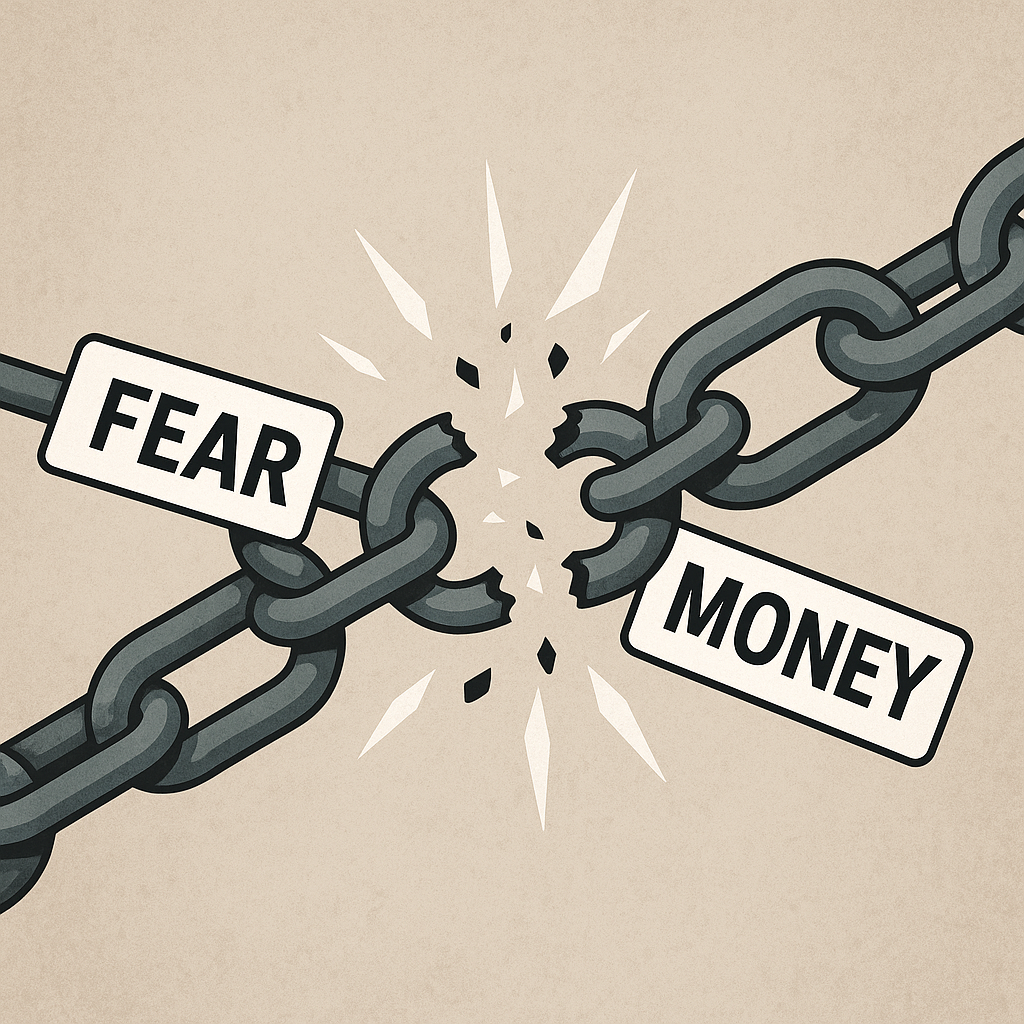
Discover the real reasons you’re afraid to charge €500 for your services, and learn 7 practical, mindset-based strategies to overcome fear, build confidence, and finally charge what you’re worth.
The fear of charging higher prices is one of the biggest invisible barriers for freelancers and creators. Charging €500 for your work might feel like climbing a psychological mountain. You know you’re good at what you do, maybe even great, yet when it comes time to name your price, your chest tightens, your voice hesitates, and you think, “Who am I to charge that much?”
Understanding the fear of charging higher prices
The psychology of self-worth and money
Money isn’t just currency, it’s a reflection of what you believe about yourself. If you’ve internalized the idea that being “too expensive” is greedy or that people will judge you, then charging €500 feels unsafe.
Psychologically, pricing touches two deep fears: rejection and self-validation. When you quote €500, you’re subconsciously asking, “Am I worth this?” And when someone hesitates, it can feel like a personal rejection, even though it’s not.
True confidence in pricing comes from separating your personal value from your professional offer. You’re not charging for your worth as a person, you’re charging for the transformation or solution you deliver.
How childhood beliefs shape your money mindset
Your early money experiences have more influence on your business than you might think.
Did you grow up hearing phrases like:
- “Money doesn’t grow on trees”?
- “You have to work hard to deserve it”?
- “Nice people don’t talk about money”?
These subconscious beliefs shape your comfort with receiving. If money once symbolized conflict, scarcity, or guilt, it’s natural you’d struggle to ask for more now. Recognizing this conditioning is the first step to rewriting it.
The role of Impostor syndrome in Your Pricing Fear
Impostor syndrome whispers that you’re not ready, not experienced enough, not there yet. It’s the same voice that keeps many marketers and freelancers stuck, doubting every skill, every win, every price they name.
I’ve written a full deep-dive on this topic – How Imposter syndrome holds back digital marketers (and how to beat it) – if you want to understand how it silently kills confidence and growth.
But here’s the paradox: you’ll never feel ready before you start charging more. Readiness comes after you do the scary thing, not before.
Common myths about charging €500 (and why they’re false)
“People won’t pay that nuch” – The scarcity trap
This belief assumes that clients decide purely based on price. In truth, they buy based on perceived value.
When you communicate your results clearly, whether it’s better health, time saved, or business growth, price becomes secondary.
There are always people willing to pay €500 if they believe the return is worth it. Your job isn’t to lower your price, it’s to elevate your positioning.
“I need more experience first” – The perfection myth
Experience helps, but transformation sells. Many clients care less about how long you’ve been doing it and more about whether you can solve their problem now.
If you’ve helped even one person achieve what your offer promises, you already have value to share.
“Others are cheaper” – The comparison fallacy
Comparing yourself to others keeps you trapped in undercharging. There will always be someone charging less – and someone charging ten times more.
The key is differentiation: your process, your energy, your perspective. People pay for the person as much as the product.
How to build confidence and overcome the fear of charging higher prices
Step 1: Quantify the real value you provide
List tangible outcomes your clients get. For example, if you help them earn €5,000 more per month, charging €500 isn’t expensive, it’s an investment with a 10x return.
Step 2: Reframe money as energy, not ego
Money is simply an exchange of energy. When you undercharge, you create imbalance, you give more than you receive. True abundance requires fair exchange.
Step 3: Anchor your price in results, not time
Don’t sell hours. Sell outcomes. Your client doesn’t care how long it takes you, they care about what they’ll gain.
Step 4: Create emotional safety around pricing conversations
Practice saying your price out loud until it feels normal. When you deliver your price confidently and pause, you communicate assurance.
The mindset shift: From fear to empowerment
Charging €500 isn’t about ego, it’s about alignment. When your price reflects your true value, you attract better clients, do better work, and build a sustainable business.
Practical tools to overcome pricing anxiety
While mindset shifts are powerful, you also need practical tools to retrain your nervous system to feel safe receiving more money. Here are proven techniques to help you reprogram your fear response around pricing.
Visualization and affirmation techniques for pricing courage
Before your next client call, take a moment to visualize yourself confidently quoting €500 and your client saying “Yes.”
Close your eyes and feel what that acceptance feels like, the calm, the gratitude, the validation. The mind doesn’t distinguish between imagined and real experiences, so rehearsing success conditions your brain to see charging €500 as safe and normal.
Pair this with daily affirmations such as:
- “I am safe to receive money.”
- “My work transforms lives and is worth every euro.”
- “I attract clients who respect and value my worth.”
Repeat these before and after client meetings until they become your default belief.
How journaling can help you rewire money shame
Journaling helps you uncover subconscious fears about money. Try prompts like:
- “What would charging €500 allow me to experience or create?”
- “Whose beliefs about money am I still carrying that aren’t mine?”
- “What’s the worst that could happen if I raised my price, and how could I handle it?”
Writing freely allows you to face the emotional roots of your fear, guilt, shame, or doubt, and release them one by one.
Using testimonials to strengthen belief in your worth
When self-doubt creeps in, let your clients speak for you. Revisit testimonials, screenshots, or thank-you notes that highlight the impact of your work.
Every time you review a success story, you reinforce evidence that your service is worth its price. You’re not “charging €500 for an hour”, you’re charging for the results, transformation, and confidence you help create.
Case study: How a freelancer tripled her income by raising prices
Let’s look at a real-world example that proves this transformation is possible.
The before story: Self-doubt and fear
Ema, a freelance designer in Sarajevo, had been charging €150 for her branding packages. She felt exhausted, undervalued, and constantly stressed about finding clients. Every time someone suggested she raise her prices, she panicked, “What if no one books me again?”
She believed higher prices meant fewer clients. But in truth, her fear was rooted in self-worth, not strategy.
The turning point: A mindset breakthrough
After joining a mindset and money coaching program, Ema realized her fear came from childhood, her parents had often said, “We can’t afford that.” She internalized the idea that asking for money was selfish.
She started practicing money affirmations, kept a “value journal,” and worked on saying her prices aloud daily. Within weeks, she confidently quoted €500 to a new client, and they said yes without hesitation.
The after story: Financial growth and freedom
Within six months, Ema doubled her client base, not because she worked harder, but because she positioned herself as premium. She had fewer, higher-paying clients, more creative freedom, and a stronger sense of self-worth.
Her total income tripled, but more importantly, she felt peaceful and proud when discussing her prices.
The lesson? Confidence compounds faster than discounts ever will.
FAQs about charging higher prices
1. How do I know if my service is worth €500?
Ask yourself: What transformation do I deliver? If your service solves a painful problem, saves time, or generates results, €500 is already fair, possibly even underpriced.
2. What if clients say they can’t afford it?
Not every client is your client. Respectfully let them go and focus on those who see your value. Remember: a “no” makes room for a better “yes.”
3. How can I talk about my price with confidence?
Practice saying your price out loud and then pause. Avoid justifying or apologizing. Silence after your quote communicates certainty and self-assurance.
4. Should I offer discounts to attract more clients?
Discounts can devalue your brand. Instead, offer bonuses (like an extra consultation or follow-up) that enhance value without lowering price.
5. How long does it take to feel comfortable charging more?
Confidence grows with experience. Typically, after your first few successful high-paying clients, your new price will start to feel natural.
6. What if I lose clients after raising my price?
That’s normal, and good. It means you’re attracting clients aligned with your new value. Losing a few mismatched clients frees space for premium ones.
Conclusion: You deserve to be paid what you’re worth
Reclaiming your power around money
Your fear of charging €500 isn’t about greed, it’s about conditioning. You were taught to equate humility with undercharging and confidence with arrogance. But that belief no longer serves you.
Charging fairly is an act of self-respect. It’s a declaration that your work matters and that you trust yourself enough to receive abundantly.
Next steps to fully embody your worth
- Set a new baseline price that reflects your true value.
- Communicate your results confidently in every sales conversation.
- Surround yourself with high-value peers who normalize abundance.
- Celebrate every time you receive money, it’s proof of trust and transformation.
You are not “too expensive.” You are simply priced for the impact you create.
“When you value yourself, the world mirrors that value back to you.”
External Resource
If you’d like to dive deeper into money mindset work, check out Denise Duffield-Thomas’s Money Mindset Blog — a trusted resource for entrepreneurs ready to release money blocks and embrace abundance.