
Amrudin Ćatić
Strategy, creativity, and technology are combined to craft digital experiences that perform. Smart marketing meets creative execution, always focused on growth, problem-solving, and real impact.
Beyond clicks: The new metrics that matter in the era of AI-driven marketing
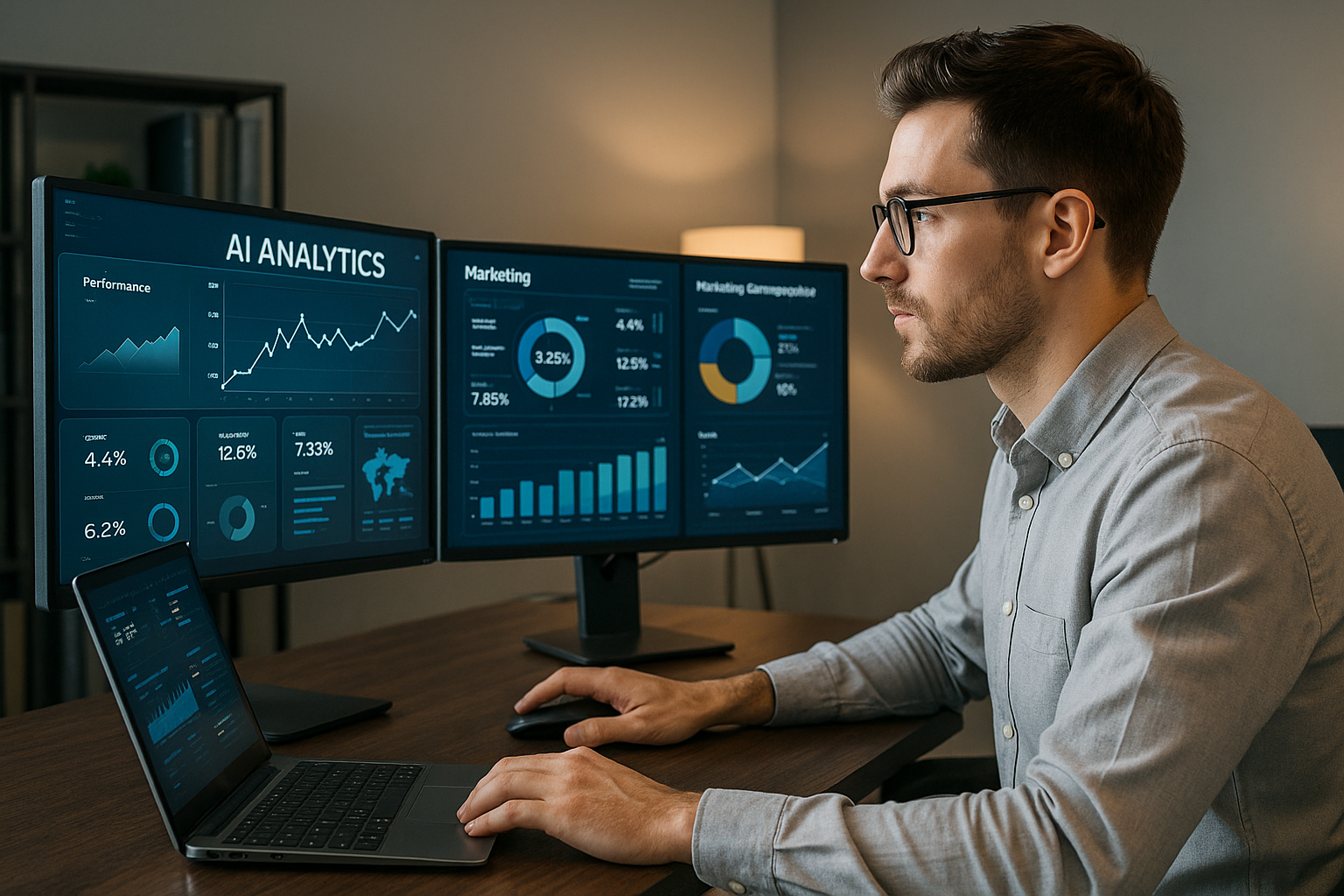
Discover why traditional metrics like clicks and impressions are no longer enough. Learn about the new AI-driven marketing metrics that redefine success in the digital era and how to implement them for sustainable growth.
Introduction: Why “Clicks” no longer tell the full story
For years, digital marketers have worshiped at the altar of clicks. A higher click-through rate (CTR) was the gold standard, a sign that campaigns were working and audiences were engaged. But in the era of AI-driven marketing, this mindset is rapidly changing.
Clicks alone no longer capture the full spectrum of user engagement, sentiment, or intent. Artificial Intelligence (AI) allows marketers to dive much deeper, into predictive behaviors, emotional engagement, and lifetime value. Simply put, we’re entering a time where what happens after the click matters more than the click itself.
The evolution of digital marketing metrics
From page views to engagement: A quick historical recap
In the early 2000s, success was measured in page views, impressions, and banner ad clicks. Then came social media, introducing engagement metrics like likes, shares, and comments.
However, these numbers, while impressive, told marketers what was happening but not why. The result? A disconnect between surface-level engagement and meaningful outcomes.
The shift from quantitative to qualitative analytics
Today’s AI-driven tools bridge that gap. They interpret user intent through behavioral patterns, emotional tone, and contextual clues. The focus is shifting from “how many people interacted” to “how deeply they interacted”, from vanity metrics to value metrics.
How AI is redefining marketing measurement
Predictive analytics and real-time insights
AI tools don’t just track past behavior, they predict future actions. Through predictive analytics, marketers can anticipate which users are most likely to convert or churn. This foresight allows proactive engagement rather than reactive marketing.
The role of machine learning in understanding user intent
Machine learning algorithms continuously learn from data, improving the accuracy of audience segmentation. Instead of broad demographic targeting, marketers can now tailor messages based on psychographics, sentiment, and micro-behaviors.
Key metrics that matter in AI-driven marketing
Customer Lifetime Value (CLV) and Predictive retention
Instead of celebrating one-time conversions, AI emphasizes long-term relationships. CLV helps brands identify their most profitable customers and focus retention efforts accordingly.
Sentiment analysis and Emotional engagement
AI-driven sentiment analysis tools measure how people feel about your brand. Whether it’s enthusiasm, frustration, or loyalty, understanding sentiment gives marketers emotional context that numbers alone can’t reveal.
Conversion quality over Conversion quantity
AI distinguishes between low-value conversions and high-intent ones. For example, not every sign-up is equal, some users are genuinely interested, while others bounce quickly. AI helps marketers allocate resources to the highest-value segments.
Engagement depth: Time spent, scroll rate, and dwell time
New engagement metrics like dwell time (how long users stay on a page) or scroll rate (how far they scroll) reveal genuine interest and content relevance.
The rise of contextual intelligence in advertising
AI-enhanced attribution models
Traditional attribution models often credit the “last click”, ignoring the complex journey users take before converting. AI attribution, however, weighs every interaction, giving credit to multiple touchpoints across the journey.
Multi-touch attribution and Journey mapping
Machine learning maps entire customer journeys, identifying the most influential channels. This gives marketers a 360-degree view of how different campaigns complement each other.
Balancing privacy and personalization with ethical AI metrics
Transparent data practices and trust indicators
As privacy laws tighten, ethical AI practices become essential. Brands must collect and use data transparently, ensuring that personalization never compromises user trust.
Metrics that reflect brand integrity and customer trust
New AI metrics track trust signals, like opt-in rates, data-sharing consent, and customer satisfaction, offering a holistic view of brand integrity.
The role of automation in measuring success
How AI tools optimize campaign tracking automatically
Automation simplifies measurement by integrating analytics across multiple platforms (like the marketing analytics stack I covered here).
Integrating AI metrics with traditional KPIs
The future isn’t about replacing KPIs, it’s about enhancing them. Combining traditional metrics (e.g., ROI, CTR) with AI-driven insights provides a more accurate success picture.
Case Studies: Brands Leading the Way with AI Metrics
Netflix’s Predictive Engagement Model
Netflix uses AI to predict what users will watch next. This predictive engagement metric keeps users hooked and boosts retention rates — a far more powerful measure than simple click data.
Amazon’s Customer-Centric AI Analytics
Amazon tracks purchase intent, browsing behavior, and product interaction time to predict buying patterns. The result? Personalized recommendations that convert better and build loyalty.
Case studies: Brands leading the way with AI metrics
Netflix’s Predictive engagement model
Netflix uses AI to predict what users will watch next. This predictive engagement metric keeps users hooked and boosts retention rates, a far more powerful measure than simple click data.
Amazon’s Customer-centric AI analytics
Amazon tracks purchase intent, browsing behavior, and product interaction time to predict buying patterns. The result? Personalized recommendations that convert better and build loyalty.
Challenges of AI-driven measurement
Data overload and Metric fatigue
While AI provides massive insights, too much data can overwhelm teams. The challenge lies in identifying which metrics truly align with business goals.
Aligning AI insights with human creativity
AI can process data, but humans interpret meaning. Successful marketing balances data-driven precision with human empathy.
Future-proofing your marketing strategy with AI metrics
The rise of autonomous optimization
Soon, AI will autonomously optimize campaigns in real time, tweaking ad copy, budgets, and targeting based on ongoing results.
Preparing teams for an AI-driven future
Training marketers to work with AI, not against it, ensures agility. The future belongs to teams that understand both analytics and empathy.
FAQs on AI-driven marketing metrics
1. Why are clicks becoming less important in marketing?
Because they measure surface-level engagement, not long-term impact or user intent.
2. What are the best AI tools for marketing metrics?
Tools like Google Analytics 4, HubSpot AI, and IBM Watson offer advanced AI-driven insights.
3. How can AI improve conversion quality?
By identifying high-value users based on predictive signals and engagement depth.
4. Is sentiment analysis reliable?
Yes, when trained with diverse data sets, AI can accurately interpret tone, emotion, and polarity.
5. How do AI metrics help with personalization?
AI tailors experiences in real time based on behavioral data, increasing relevance and satisfaction.
6. What’s the next big trend in marketing measurement?
Autonomous optimization, AI that adapts campaigns without human intervention.
Conclusion: Beyond clicks – Measuring what truly matters
In the era of AI-driven marketing, clicks are just the beginning. Modern marketers must focus on deeper metrics like emotional engagement, CLV, and trust, the real drivers of brand growth and customer loyalty. By embracing AI-powered analytics, businesses can move beyond vanity metrics and toward meaningful, measurable impact.
External reference:
Learn more about How Gen AI Is Transforming Market Research from Harvard Business Review.