
Amrudin Ćatić
Strategy, creativity, and technology are combined to craft digital experiences that perform. Smart marketing meets creative execution, always focused on growth, problem-solving, and real impact.
AI Content detectors vs Human touch: What actually works in 2025?
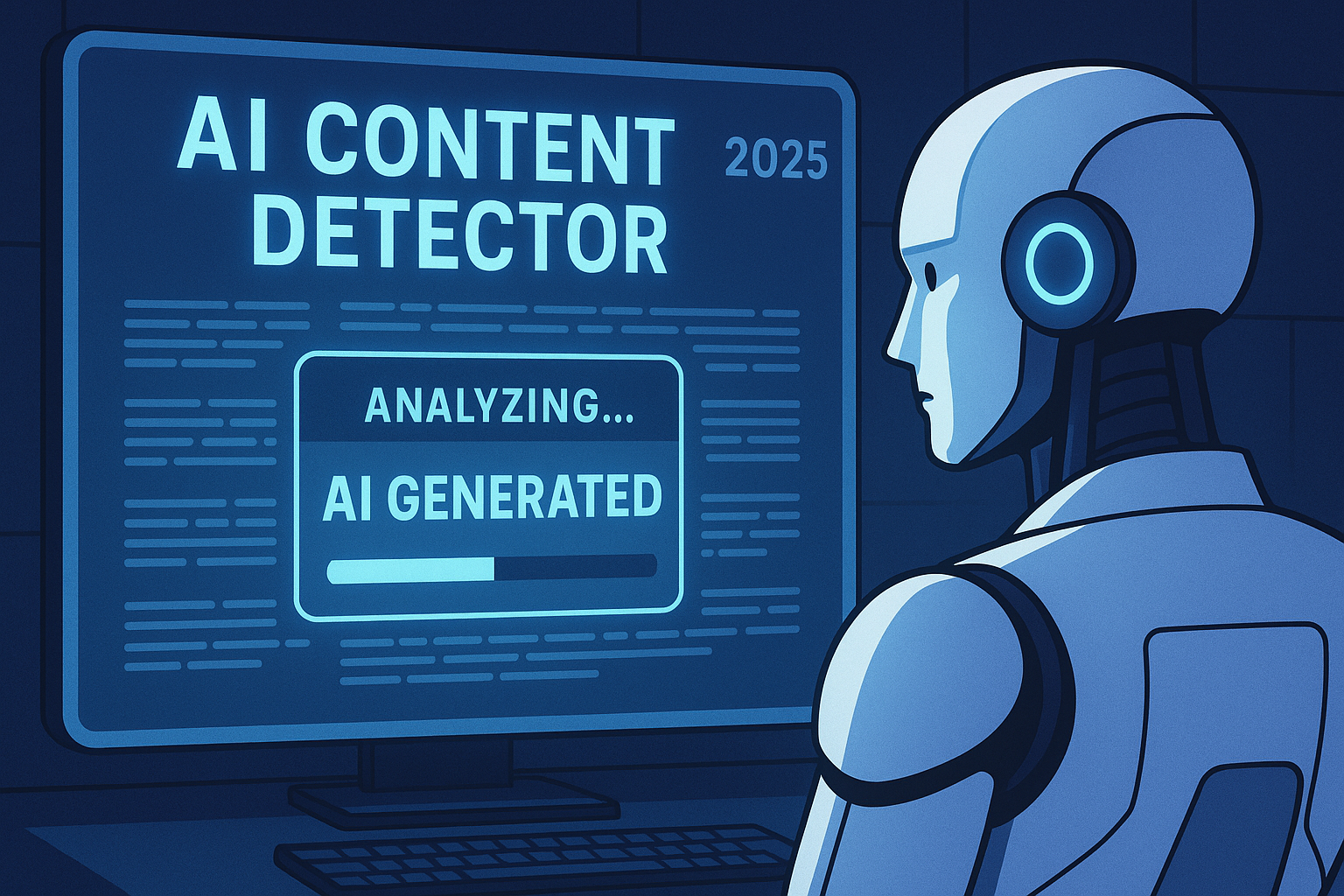
AI Content detectors and Human touch are like job interviewers, they’re convinced they know who’s lying, but sometimes the most nervous candidate is actually telling the truth.
Introduction: The rise of AI content in 2025
The year 2025 marks a defining moment in the world of digital content. Artificial Intelligence has advanced so rapidly that AI-generated articles, reports, and even creative writing pieces are now almost indistinguishable from human work. At the same time, AI content detectors, tools designed to spot machine-written text have become equally sophisticated.
But here’s the question that marketers, educators, and businesses keep asking: Can AI detectors truly outsmart AI, or does human touch still hold the crown when it comes to authentic, impactful content?
This article explores the ongoing battle between AI content detectors and the human touch in writing, breaking down what really works in 2025.
What are AI Content detectors?
How AI detectors work
AI content detectors use algorithms to identify patterns, sentence structures, and probability scores that suggest whether a piece of text was generated by AI. These tools often analyze:
- Perplexity: how predictable the text is.
- Burstiness: variation in sentence length and structure.
- Stylistic clues: word repetition, formal tone, and unnatural phrasing.
Common AI Detection Tools in 2025
Some of the most popular tools dominating the market today include:
- GPTZero – used in universities worldwide.
- Originality.ai – popular with content marketers.
- Turnitin AI Detection – leading in academia.
- Copyleaks AI Detector – used by publishing houses.
Despite their sophistication, none of these tools is flawless.
The limitations of AI Content detectors
Accuracy concerns and false positives
Even the most advanced AI detectors struggle with accuracy. A human-written article with a formal tone can sometimes be flagged as “AI-generated”. Likewise, cleverly prompted AI text may pass as “100% human”.
Bias and ethical challenges
Biases in training data can cause detectors to unfairly penalize certain writing styles. This raises ethical questions, especially in education, where false positives can harm a student’s academic record.
Human touch in content creation
Creativity and emotional connection
What machines can’t replicate, at least not fully, heh, is the depth of human emotion. Readers still crave authenticity, humor, and empathy. A heartfelt story, a clever metaphor, or a cultural reference often resonates more than AI’s polished but soulless paragraphs.
Storytelling vs Machine-generated text
Humans excel in weaving narratives that connect with personal experiences. While AI can mimic structure, it often misses the “soul” of storytelling. That’s where the human touch makes content timeless.
AI Content detectors vs Human touch: A sideby side comparison
| Factor | AI Content detectors | Human touch |
|---|---|---|
| Readability & Engagement | Clear, structured, but often robotic | Natural flow, humor, emotion |
| SEO & Rankings | Optimized, keyword-heavy | Balanced, audience-first |
| Trust & Authenticity | May raise suspicion if flagged | Builds credibility with readers |
The future of hybrid content creation
AI as a tool, not a replacement
The smartest creators in 2025 don’t choose between AI and human touch. Instead, they combine both. AI helps brainstorm, draft, and optimize, while humans refine, fact-check, and inject creativity.
The role of editors and content strategists
Editors are becoming more crucial than ever. Their role? To polish AI drafts, ensure originality, and safeguard brand voice.
Real-world examples: Who’s winning in 2025?
Case studies from Media & Marketing
- BuzzFeed uses AI to generate quick drafts but relies on journalists to finalize stories.
- E-commerce brands use AI for product descriptions but add human copywriters for ad campaigns.
Lessons from Education & Academia
Universities use detectors like Turnitin, but professors increasingly value oral presentations and project-based work over written essays to judge originality.
FAQs on AI Content detectors vs Human touch
Q1: Can AI detectors guarantee 100% accuracy?
No. While advanced detectors often misclassify text, leading to both false positives and negatives.
Q2: Is AI content bad for SEO in 2025?
Not necessarily. Search engines reward quality, originality, and user value, not just authorship. Also, check here how to create high-converting content in 2025.
Q3: Should businesses stop using AI tools for content?
Absolutely not. Businesses should use AI to assist, but always add human oversight.
Q4: How can writers bypass AI detectors?
By adding personal stories, unique phrasing, and creativity, writers can make content indistinguishable from AI.
Q5: Will AI ever fully replace human writers?
Unlikely. AI can mimic style but lacks true emotional intelligence and cultural nuance.
Q6: What’s the best balance between AI and human writing?
Use AI for efficiency, but keep human writers for storytelling, brand voice, and engagement.
Conclusion: Striking the right balance
In 2025, the answer isn’t about AI content detectors vs human touch, it’s about collaboration. AI can boost productivity and help scale content, but human writers bring creativity, authenticity, and trustworthiness that machines can’t replicate.
The future belongs to those who master both worlds.
For further insights, check out Harvard Business Review, and for more digital marketing insights, check out my other posts here.