
Amrudin Ćatić
Strategy, creativity, and technology are combined to craft digital experiences that perform. Smart marketing meets creative execution, always focused on growth, problem-solving, and real impact.
How to build a 6-month content plan without posting every day
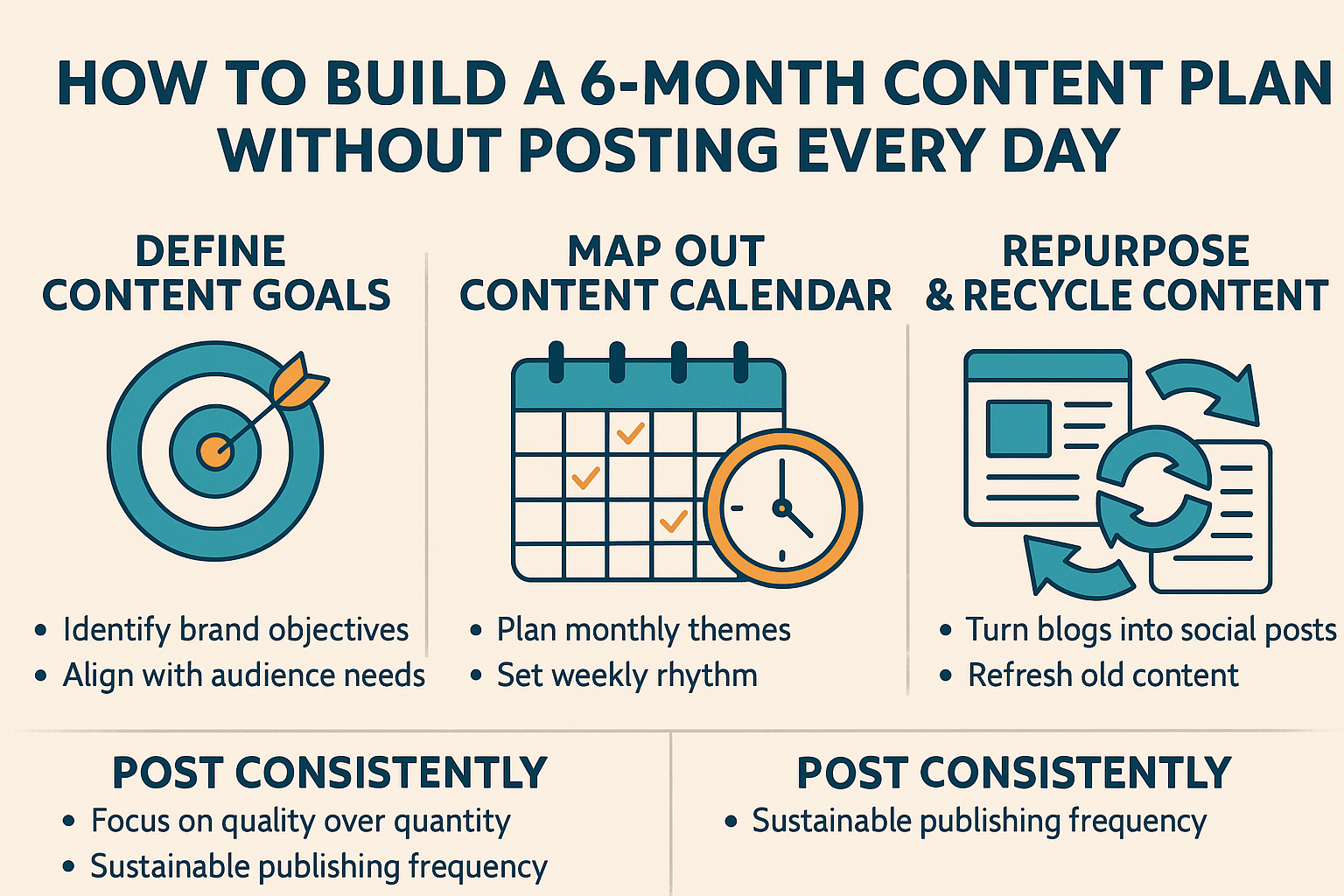
Let’s clear the air: posting daily doesn’t guarantee growth. In fact, it can backfire by leading to rushed, low-quality content. Audiences today value quality, consistency, and relevance over sheer volume. With a carefully planned 6-month roadmap, you’ll post less often but make a bigger impact.
Introduction: Why a long-term content plan matters
If you’ve ever felt burnt out by the constant pressure to post every single day, you’re not alone. Many marketers and business owners think daily posting is the only way to grow online, but in reality, sustainability is key. A 6-month content plan helps you stay consistent, reduce stress, and focus on producing meaningful, high-quality content that actually drives results.
Instead of being glued to your laptop every day, you’ll work smarter, mapping out content themes, leveraging repurposing strategies, and using automation tools to your advantage.
Step 1: Define your core content goals
Identifying brand objectives
Before you start creating, define your big-picture goals. Do you want to drive website traffic, increase brand awareness, or generate leads? Using the right SEO tools can make each of these goals easier to achieve.
- Drive website traffic?
- Increase brand awareness?
- Generate leads or sales?
Your objectives will determine the type of content you create and how frequently you produce it.
Aligning with audience needs
Next, think about your audience. What challenges do they face? What type of content would truly help them? When your goals align with their needs, you’ll create content that builds trust and loyalty.
Step 2: Audit your existing content
Reviewing high-performing posts
Look at your analytics. Which blog posts, videos, or social updates performed well in the past? These are your goldmines.
Repurposing vs. Creating new
Not every piece needs to be brand new. Repurpose top-performing articles into:
- Infographics
- Short-form social posts
- Video explainers
This saves time while extending your content’s reach.
Step 3: Choose the right content pillars
The power of evergreen content
Evergreen content, guides, tutorials, and FAQs. Stays relevant for months (or years). These pieces should form the foundation of your 6-month plan.
Seasonal and Timely topics
Mix in seasonal campaigns, trending news, or industry updates to keep your content fresh and timely. For example, strategies like guest posting in 2025 show how staying on top of industry shifts can directly shape your content pillars
Step 4: Map out a 6-month content calendar
Monthly content themes
Choose a theme for each month (e.g., “SEO Basics” in January, “Content Repurposing” in February). This provides structure while allowing creativity.
Weekly publishing rhythm
Instead of posting daily, consider:
- 1 blog post per week
- 2–3 social updates
- 1 email newsletter
This keeps you visible without overwhelming you.
Balancing blog posts, videos, and social
A diverse mix helps you reach audiences across different platforms.
Step 5: Optimize content frequency
Quality vs. Quantity debate
A single, well-crafted article or video can outperform 10 rushed posts. Prioritize depth and value.
Ideal posting cadence for sustainability
Most small businesses succeed with 3–5 posts per week across different platforms, not 30.
Step 6: Build in repurposing and recycling
Turning blogs into social posts
One blog post can become:
- 5 LinkedIn updates
- 3 Instagram captions
- 1 YouTube video outline
Refreshing old content for SEO
Update old articles with fresh data and new visuals to maintain search engine visibility.
Step 7: Use tools to simplify planning
Editorial calendars and templates
Google Sheets, Notion, or Trello can help you visualize your 6-month plan.
Automation and scheduling tools
Platforms like Buffer, Hootsuite, and Later save time by automating posting.
Tracking success over 6 months
KPIs to measure content effectiveness
Monitor metrics like:
- Website traffic
- Engagement rates
- Lead conversions
Adjusting strategy mid-plan
At the 3-month mark, review progress and tweak your approach.
Common mistakes to avoid
Overloading the calendar
Don’t pack every day with content, it’s unsustainable.
Ignoring analytics
If you’re not measuring, you’re guessing. Data should guide your decisions.
FAQs on 6-month content planning
1. Do I need to post daily to grow my brand?
No, quality beats quantity. Consistency matters more than daily posting.
2. How many posts should I publish weekly?
For most brands, 3–5 posts spread across platforms work well.
3. What tools can help with a 6-month content plan?
Notion, Trello, Buffer, and Hootsuite are great for organization and automation.
4. How do I keep content ideas fresh for 6 months?
Mix evergreen, seasonal, and repurposed content to stay relevant.
5. Should I include video in my content plan?
Yes! Videos drive high engagement and can be repurposed across platforms.
6. How often should I review my content strategy?
Every 3 months is ideal to make necessary adjustments.
Conclusion: Building a sustainable content strategy
A 6-month content plan doesn’t mean posting daily, it means posting smart. By defining goals, auditing existing content, choosing strong content pillars, and leveraging tools, you can create a strategy that works for you without burning out. Focus on consistency, repurposing, and quality, and you’ll see long-term results. A well-structured 6-month content plan ensures you stay consistent without burning out.